

Fixed vs. Variable Mortgages: Which One is Right for You?
When it comes to getting a mortgage, one of the first decisions you’ll need to make is whether to choose a fixed-rate or variable-rate mortgage. Both options have their pros and cons, and the best choice for you depends on your financial situation and goals. Let’s break down what each one is and help you figure out which might be the best fit for you.
What is a Fixed-Rate Mortgage?
A fixed-rate mortgage is one where the interest rate stays the same for the entire term of the loan. Whether your mortgage term is 1, 3, 5, or even 10 years, you’ll pay the same interest rate for the whole time.
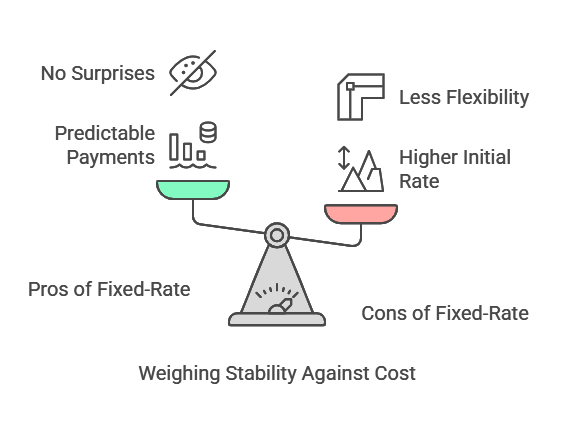
Pros and Cons of a Fixed-Rate
What is a Variable-Rate Mortgage?
A variable-rate mortgage (also known as an adjustable-rate mortgage) has an interest rate that can change over time. Typically, the rate is tied to a benchmark interest rate, like the prime rate. If the benchmark rate goes up, your rate and monthly payments will go up too. If the benchmark rate goes down, your rate and payments could decrease.
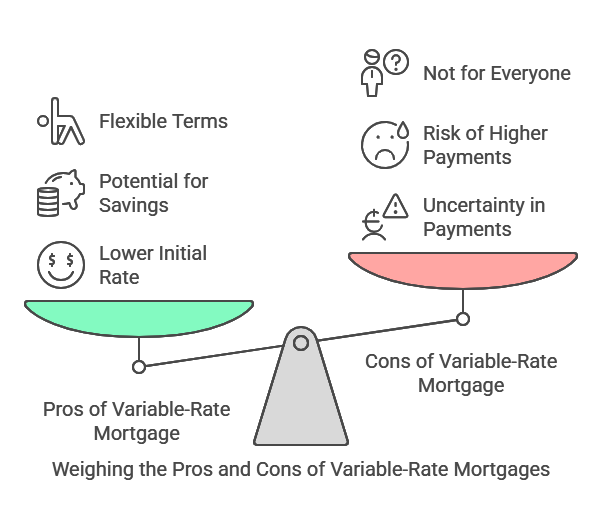
Pros and Cons of a Variable-Rate
Which One Should You Choose?
Deciding between a fixed-rate and a variable-rate mortgage depends on your comfort level with risk and your financial situation.
When to Choose a Fixed-Rate Mortgage:
- If you like predictability and want to know exactly how much you’ll pay each month.
- If interest rates are low when you get your mortgage and you want to lock in that rate for the long term.
- If you plan to stay in your home for a long time and want stability.
When to Choose a Variable-Rate Mortgage:
- If you’re okay with some uncertainty and can handle the possibility of higher payments if interest rates rise.
- If you think interest rates will stay low or even drop during your term, and you’re willing to take advantage of the potential savings.
- If you want to save money in the early years of your mortgage when the interest rate is lower.
Fill out the form below if you have any questions for me regarding what solution may be better for your unique scenario.